
Key takeaways
- Combination skin usually means an oily T-zone with normal to dry cheeks.
- A balanced routine beats harsh, oil-stripping products.
- Niacinamide, hyaluronic acid and salicylic acid (BHA) are among the best-studied ingredients for this skin type.
- Stress and hormonal changes can affect how oily skin behaves.
- A professional treatment is worth it once a consistent routine on its own no longer helps.
Why is your T-zone already shiny by lunchtime while your cheeks feel tight or dry? The reason is an uneven distribution of your sebaceous glands, and you are not alone: in an online survey of 710 people, 52.1% described their facial skin as combination skin, more than any other skin type (Cureus, 2022).
The typical mistake is treating your whole face like oily or like dry skin. Cleansing the T-zone too often ends up drying out your cheeks, your sebaceous glands compensate, and you get exactly the imbalance you wanted to get rid of.
In this article we show you what defines combination skin, why it develops and how to recognise it. You also get a routine with morning and evening steps, the five most common skincare mistakes and when a professional treatment at AFACIAL is worth it.
What is combination skin?
Combination skin is defined by excess sebum production in the T-zone (forehead, nose and chin), while your cheeks stay closer to normal or dry. Because the two zones behave so differently, a single product rarely works equally well across your whole face.
What are typical signs of combination skin?
Typical signs are an oily forehead and a shiny nose within a few hours of cleansing, enlarged pores and occasional blackheads around the nose, and tightness or uneven texture on the cheeks. Make-up usually breaks down first in the centre of the face, while dry patches appear around the edges.
Combination skin or oily skin: what is the difference?
Combination skin is easily mistaken for oily skin, but the two need different care:
| Combination skin | Oily skin | |
|---|---|---|
| Where the oil shows | Concentrated in the T-zone | Across the whole face |
| Cheeks | Normal to dry | Oily, like the rest |
| Pores | Mixed sizes, larger around the nose | Enlarged throughout |
| Care | Targeted, zone by zone | General oil control |
If you confuse the two, you usually end up with products that are too harsh for your cheeks or too light for your T-zone.
Why does combination skin develop?
Combination skin develops through a mix of genetics, hormones, skincare habits and environmental factors that make the T-zone produce more sebum than the cheeks.
What role do genetics and sebaceous glands play?
Sebaceous glands are not evenly distributed across the face. The T-zone naturally has a higher density of them and therefore produces more oil than the cheeks, no matter how carefully you look after your skin.
Genetics largely sets this baseline: if oily skin runs in your family, a pronounced T-zone is likely.
How do hormones and stress affect your skin?
Hormones shift this baseline further. Sebum production tends to rise during puberty, around your menstrual cycle, during pregnancy and under ongoing stress, which is why combination skin becomes more noticeable exactly when life is more stressful anyway.
The link between stress and blemish-prone skin is more than everyday experience: a review from the University Hospital Centre Zagreb sums up how emotional stress can trigger or worsen acne through messenger substances in the skin, and therefore recommends a holistic view of the skin (Jović et al., 2017).
Which skincare habits make combination skin worse?
Skincare habits can make the imbalance worse instead of better. Harsh cleansers, washing too often, alcohol-based toners and skipping moisturiser all put strain on the skin barrier.
Your skin then often responds with even more oil to compensate, the exact opposite of what your routine was supposed to achieve.
How does your environment affect your skin?
Your environment plays a role too. Heat and humidity increase shine in the T-zone, heating dries out the cheeks, and the change of seasons pushes the skin barrier off balance in both directions.
A routine that works in summer often needs adjusting in autumn.
How can you tell if you have combination skin?
You can recognise combination skin when your forehead, nose and chin start to shine shortly after cleansing while your cheeks stay normal to dry.
How does the quick test work?
The easiest way: watch how different areas of your face behave after cleansing, without any other products.
- Wash your face with a gentle cleanser.
- Do not apply any other products.
- Wait 15 to 30 minutes.
- Look at your skin in natural light.
If your forehead, nose and chin shine while your cheeks stay dry or tight, that is combination skin. Shine everywhere points to oily skin, tightness everywhere to dry skin.
Which signs show up in everyday life?
In everyday life the same pattern shows on a smaller scale: your nose is shiny before lunch, your cheeks feel tight right after cleansing, make-up fades first in the T-zone, and blackheads appear now and then rather than constantly. These signs usually get stronger when the seasons change.
When is a skin analysis worth it?
A professional skin analysis is worth it when your own assessment gives contradictory results, products stop working for no obvious reason or breakouts keep coming back. It reliably tells dehydration, sensitivity and real blemishes apart, which is hard to do at home.
Not sure which skin type you have? Our skin quiz gives you a first assessment.
Your skin.
Your facial.
We have 27 facials. One is exactly right for you. Seven questions, then we'll show you which one.
Seven questions. Under two minutes. No sign-up.
Question 1 of 7
Hands or high-tech?
Both work. Which style do you prefer?
Question 2 of 7
What's on your mind about your skin?
Pick one. We build everything around it.
Question 3 of 7
How is your skin, honestly?
One pick is enough. Skin is complex.
Question 4 of 7
Your age. So we plan it right.
Question 5 of 7
When do you want your skin to look its best?
We factor in downtime and series.
Question 6 of 7
Before we recommend: anything we should know?
Important for your safety. Multiple possible.
Question 7 of 7
One answer or a few options?
Both work. You decide.
This is your match.
Picked from 27 facials, based on your answers.
A skin analysis is the better next step
With your combination of goals and safety notes, an in-studio consultation is the safer path. We look together at what makes sense.
Picked from 27 facials, based on your answers.
Holy Glow
159 €Manual brightening treatment. Gentle, no machines. For fresh, even skin.
Right after: fresher, more even tone. Glow visible for 5 to 7 days.
One-off or monthly as routine. Effect builds with consistency.
No downtime. You leave with skin you recognise.
Bye Acne
159 €Manual deep cleanse for skin with comedones and clogged pores.
Right away: deeper-cleansed, smoother skin. Visibly fewer comedones.
One-off or monthly, depending on your skin.
Possible mild redness 12 to 24 h. Makeup-ready after.
Crystal Clear
159 €Gentle cleanse for sensitive skin with breakouts. No pressure, no reaction.
Cleansed, calmer skin right away. No reaction.
Monthly as regular care for sensitive skin.
No downtime. Designed for reactive skin.
Ageless Shine
159 €Manual anti-age protocol with massage and active ingredients.
Fresh tone. Softer lines visible. Noticeably relaxed skin.
Monthly as an anti-age routine, no downtime.
No downtime. A gentle entry into anti-age.
Calm Radiance
159 €Manual protocol for sensitive, reddened skin. Calming and barrier rebuilding.
Less redness, less tightness. Calmed skin after 60 minutes.
Every 3 to 4 weeks for reactive skin.
No downtime. Safe even for very sensitive skin.
Juicy Skin
159 €Manual hydrating treatment. Deep replenishment, visible plump.
Plumper, visibly hydrated skin. Plump effect for several days.
Monthly or as needed after flights, stress.
No downtime. Ready to go right away.
Power Lift
119 €EMS. Electrical stimulation for your facial muscles. Lifting from within, no needles.
Right after: more tone, a slightly lifted look.
Series of 4 to 6 sessions. Then monthly maintenance.
No downtime. Effect builds with each session.
JetPeel Anti-Age
199 €Contactless. Peptides and antioxidants deep into skin, no needles.
Smoother, fresher skin right away. Actives keep working in the days after.
Series of 4 to 6 with 2 weeks between.
No downtime. Ready to go.
Microneedling Face
199 €Structural anti-age work. Stimulates collagen, smooths texture and post-breakout marks.
First session: visibly smoother texture. After 4 to 6 weeks: noticeably firmer.
Series of 4, 4 weeks apart.
12 to 24 h redness. 2 to 3 days fine flaking. Plan for Thursday or Friday.
HydraFacial Circadia (Anti-Age)
199 €HydraFacial with Circadia actives. Stronger regular-care effect.
Right after: smoother, fresher skin. Visibly cared for 1 to 2 weeks.
Monthly as elevated care routine.
No downtime. Ready to go.
Microneedling x BioRePeel
249 €Microneedling opens micro-channels, BioRePeel works deep in the dermis. Two mechanisms, one session.
First session: noticeably smoother skin. After the series: clearly more even tone, fewer post-breakout marks.
Series of 4, 4 weeks between each.
3 to 7 days recovery with light flaking. Plan a quiet week.
HydraFacial x Microneedling
299 €HydraFacial preps, microneedling builds. Texture and firmness in one session.
First session: smoother texture, fresh tone. After the series: firmer skin, more even texture.
Series of 4 with 4 weeks between.
2 to 3 days fine flaking. Makeup possible after 24 h.
Laser Anti-Age (Lutronic LaseMD)
299 €Our flagship laser. Strongest anti-age work.
First session: freshness and smoother texture. After 3 sessions: noticeably firmer, more even skin.
Three sessions, four weeks apart. Maintenance every 3 to 6 months.
1 to 2 days redness. 3 to 7 days fine flaking. Daily SPF, no exceptions.
JetPeel Acne Protocol
169 €Contactless, no pressure on inflamed skin. Actives for breakouts and post-breakout marks.
Right after: calmer, fresher skin. Over the series: noticeably fewer pimples and post-breakout marks.
Series of 4 to 6 with 1 to 2 weeks between.
No pressure on inflamed skin. No downtime.
HydraFacial x Circadia Acne
199 €HydraFacial with acne-focused Circadia actives. Regular care for breakout-prone skin.
Immediately: cleansed, calmer skin. Over series: noticeably more even skin.
Every 3 to 4 weeks as regular care.
No downtime. Maintenance for acne-prone skin.
BioRePeel
149 €TCA peel with protective phase. Deep renewal. Safe for darker skin too.
Over 3 to 5 days: surface renewal. Visibly more even tone, fewer post-breakout marks.
Series of 4 to 6, 1 to 2 weeks apart.
Very light flaking 2 to 3 days. Safe in summer.
HydraFacial x BioRePeel
249 €The AFACIAL move for post-breakout marks and pigment. HydraFacial cleanses, BioRePeel works deep.
First session: noticeably renewed skin. After the series: significantly reduced post-breakout marks and pigment.
Series of 4, 2 weeks apart.
Light flaking 2 to 3 days. Plan a calmer week.
Laser Face (Acne & Scars)
299 €Lutronic LaseMD for stronger post-breakout marks and scars. Structural work.
Over the series: significant reduction in visible post-breakout marks and scars.
Series of 4, 4 weeks apart.
1 to 2 days redness. 3 to 5 days fine flaking. Patience pays off.
Glow to Go HydraFacial
169 €Base HydraFacial. 60 min deep clean, gentle peel, active infusion.
Right after 60 minutes: deep-cleansed, hydrated skin with visible glow.
One-off or monthly as routine.
No downtime. Event-ready immediately.
Rise and Shine JetPeel
169 €JetPeel Glow. Vitamin C, hyaluronic acid, antioxidants. Ideal 1 to 2 days before the day.
Right after: visibly tighter, glowing skin. Glow for 3 to 5 days.
One-off before an event. Monthly for regular boost.
No downtime. Makeup right away.
Jalupro Glow Peel
149 €Glow + anti-age + light renewal.
Over 3 to 5 days: light flaking, then noticeably fresher, smoother skin.
One-off or anti-age touch before event.
Plan at least 7 to 10 days before. Very light flaking.
Laser Glow Facial
299 €Premium glow with Lutronic LaseMD.
First session: deeper glow. After series: more even, cared-for, firmer tone.
Three sessions, 4 weeks apart.
1 to 2 days redness. 3 to 7 days fine flaking. Plan at least 2 weeks before the event.
JetPeel Hydration
169 €Hyaluronic acid deep into the dermis, where water is missing.
Immediately: noticeably plump, hydrated skin. Plump effect for several days.
Series of 3 to 4 with 1 to 2 weeks between.
No downtime. Ideal after flights, stress, dry heating.
JetPeel Sensitive
169 €Contactless, soothing actives.
Right after: less redness, calmed skin. Skin barrier supported.
Series of 4 to 6 with 2 weeks between.
No contact, no pressure. Even for very reactive skin.
Switch Peel: Glow Activation
159 €Peel for pigment marks and tone. Visible freshness.
Over 3 to 5 days: light flaking, then visibly more even tone and reduced pigment.
Series of 3 with 2 weeks between.
Light flaking 2 to 3 days. SPF required.
Laser Treatment (Pigmentation)
299 €Lutronic LaseMD. Our strongest tool for stable pigment marks.
Over the series: significantly reduced pigment marks, more even tone.
Three sessions, 4 weeks apart. Maintenance every 6 months.
1 to 2 days redness. 3 to 7 days fine flaking. Daily SPF or pigment returns.
Laser Scar Treatment
299 €Lutronic LaseMD for scars.
Over the series: noticeable reduction of indented scars, smoother texture.
Series of 4 with 4 weeks between.
1 to 2 days redness. 3 to 5 days fine flaking. Patience pays off.
Ready for your appointment?
Book directly online or message us. We answer today.
This is a suggestion. At the in-studio skin analysis we'll pick together what really fits.
What does the ideal routine look like?
The ideal routine for combination skin combines a gentle cleanser and niacinamide in the morning with a targeted active serum in the evening, to regulate the T-zone and keep the cheeks hydrated.
The most effective routine does not try to eliminate oil completely. It balances oil control and hydration, so the T-zone calms down without the cheeks drying out.
Morning
| Step | Purpose |
|---|---|
| Gentle cleanser | Remove overnight oil |
| Niacinamide serum | Regulate sebum production |
| Light moisturiser | Maintain hydration |
| Sunscreen SPF 30+ | Protect against UV damage |
Evening
| Step | Purpose |
|---|---|
| Gentle cleanser | Remove make-up and the day’s build-up |
| Active serum | Target specific concerns |
| Light moisturiser | Support overnight repair |
| Optional: targeted exfoliant (a few times a week) | Clear pores without overdoing it |
Which ingredients matter most?
Five ingredients have proven themselves for combination skin: niacinamide regulates sebum production, hyaluronic acid hydrates without heaviness, salicylic acid (BHA) clears pores, panthenol supports the skin barrier, and glycerin attracts and holds moisture.
Niacinamide is the best studied. In a double-blind, placebo-controlled study with 100 participants in Japan, half applied a moisturiser with 2% niacinamide for four weeks and the other half the same moisturiser without the active ingredient. In the niacinamide group, sebum excretion dropped significantly after just two weeks (Draelos et al., 2006).
Salicylic acid shows that less oil and more hydration are not a contradiction: in a 21-day study with 42 participants with oily or combination skin and mild to moderate acne, a salicylic acid gel reduced sebum by 23.65%, skin hydration rose by 40.5%, and water loss through the skin, a measure of barrier strength, fell by 49.26% (Liu et al., 2025). The study had no control group and was supported by the maker of the gel, but it fits what combination skin needs.
What helps when your skin is irritated?
If your skin feels irritated, less is usually more: pause exfoliants for a few days, cut back to a gentle cleanser and a hydrating moisturiser, avoid hot water and stick to fragrance-free products until your skin has calmed down.
Which skincare mistakes should you avoid?
The most common skincare mistakes with combination skin are washing too often, harsh toners, skipping moisturiser, over-exfoliating and squeezing blemishes.
Most problems with combination skin get worse through overcorrection, not through too little care.
- Washing too often. More than twice a day strains the skin barrier instead of protecting it, and your skin often responds with more oil, dryness and sensitivity, the opposite of the effect you want.
- Alcohol-based toners and harsh anti-oil products. Many products marketed for oil control are harsh enough to cause redness, increased sensitivity and a rebound with even more oil. Gentler formulas control oil just as well without irritating.
- Skipping moisturiser. The idea that oily skin does not need moisturiser is wrong: when your skin lacks moisture, this can stimulate oil production even more.
- Over-exfoliating. Daily exfoliation or several exfoliating acids at once damage the barrier faster than they clear pores. Targeted use a few times a week is usually enough.
- Squeezing blemishes. Squeezing blackheads or spots usually leads to more inflammation and a higher risk of scarring than letting them settle with a consistent routine.
When is a professional treatment worth it?
A professional treatment is worth it when blackheads keep coming back despite consistent care, pores stay clogged or oil production cannot be brought under control at home.
When is skincare alone no longer enough?
Skincare alone is no longer enough when blackheads return quickly, pores stay clogged despite a consistent routine, texture stays rough or oil production will not settle despite all your efforts at home. At this point a professional treatment achieves what daily products alone cannot. Find out more about what helps with frequent breakouts on our pages about blemished skin and large pores.
Which treatments suit you at AFACIAL?
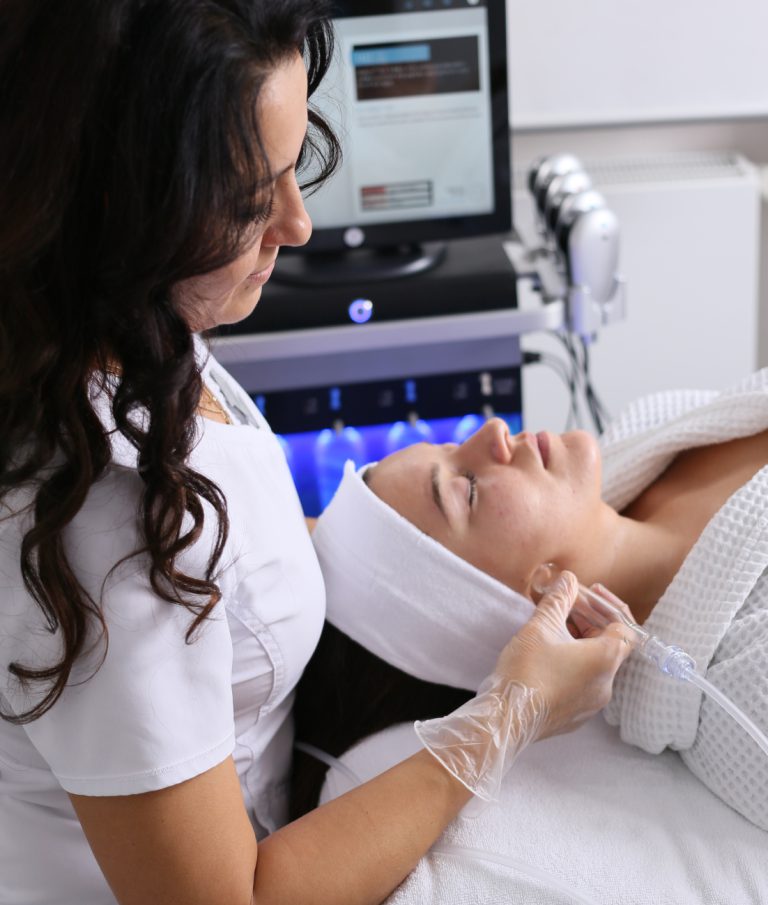
A HydraFacial is especially popular for combination skin because it combines deep cleansing, gentle exfoliation and hydration in one session, so the oily and dry areas of your face are treated at the same time. We explain exactly how it works in our article What is a HydraFacial?. A professional facial cleansing complements your routine by removing build-up that daily cleansers usually miss. For dry or dehydrated areas, a JetPeel delivers targeted hydration without putting extra strain on the T-zone.
| Concern | Possible treatment |
|---|---|
| Clogged pores | Facial cleansing |
| Dull skin | HydraFacial |
| Dry, dehydrated areas | JetPeel |
| Not sure which skin type you have | Skin analysis |
How does combination skin change after 40?
After 40, sebum production drops, so combination skin becomes drier overall and the cheeks in particular need more moisture.
Why do the cheeks get drier?
With age, sebum production gradually decreases while it gets harder for the skin to hold moisture. Combination skin therefore tends to become drier, especially on the cheeks, which were already the drier zone.
This shift happens because the sebaceous glands slow down, skin renewal takes longer, moisture loss increases and collagen content declines. These changes show more clearly on the cheeks than in the T-zone, where there is usually still enough sebum for some shine. Find out what dry and sensitive skin needs on our page about dry and sensitive skin.
How should you adapt your routine?
Adapt your routine to focus more on hydration: richer, more nourishing products for the cheeks, while the T-zone stays with lighter formulas so it does not clog. Daily sun protection becomes even more important, because UV radiation speeds up exactly the collagen and barrier changes that are already under way. Which beliefs about sunscreen are wrong, you can read in our sunscreen myths.
Hyaluronic acid, niacinamide, peptides, ceramides and antioxidants remain the key ingredients, just with a stronger focus on hydration and barrier protection as your skin’s own sebum production declines.
Not sure whether your skin is combination skin or something else? At your first appointment at AFACIAL the skin analysis is included, and we tell you honestly what suits your skin.
Combination skin: frequently asked questions
How do I know if I have combination skin?
Your forehead, nose and chin start to shine shortly after cleansing while your cheeks stay normal to dry. For a quick test, wash your face gently, apply nothing and check after 15 to 30 minutes in daylight where your skin is shiny.
Does combination skin need a moisturiser?
Yes. A light moisturiser keeps your cheeks supple and your skin barrier stable. When your skin lacks moisture, this can even stimulate oil production in the T-zone.
Which ingredients help with combination skin?
Niacinamide against excess sebum, salicylic acid (BHA) for clear pores, and hyaluronic acid, panthenol and glycerin for hydration and a strong skin barrier have proven themselves.
How often should I exfoliate combination skin?
A few times a week is usually enough, ideally targeted at the T-zone. Daily exfoliation or several acids at once damage the skin barrier faster than they clear pores.
Which treatment suits combination skin?
At AFACIAL the HydraFacial is especially popular because it combines cleansing, gentle exfoliation and hydration in one session. Facial cleansing helps with clogged pores, a JetPeel with dry areas. We work out which treatment suits your skin in the skin analysis at your first appointment.
Can’t find your question? Just send us a message. Ask on WhatsApp